

1. Overview of Population Growth
According to the 2026 Federal Budget forecasts, Australia’s population is expected to grow from around 28 million to nearly 29.4 million between 2029 and 2030. This represents an increase of approximately 1.4 million people over four years.
Notably, more than 70% of this increase is expected to come from migration. With Australia’s fertility rate remaining low at around 1.44 births per woman, immigration has become a key driver of population growth.
2. Migration as a Structural Driver of the Economy
2.1 Policy Adjustments
Although the government previously planned to reduce migration levels, recent data shows an upward revision:
- 2025–2026: 295,000 arrivals
- 2026–2027: 245,000 arrivals
- 2028–2030: approximately 225,000 per year
In total, nearly 1 million migrants are expected over four years, accounting for around 71% of overall population growth.
2.2 Role in the Labour Market
Australia is currently facing labour shortages across multiple sectors, including healthcare, construction, technology, and education. Migrants play a critical role in filling these gaps, supporting economic activity and long-term growth.
3. Population Distribution Across States
Population growth is concentrated mainly in major states:
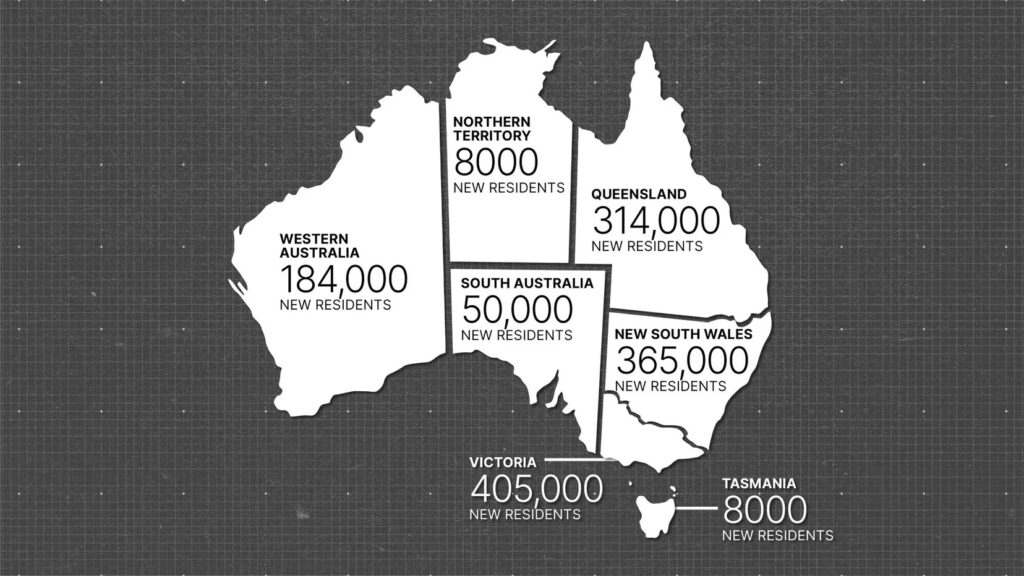
- Victoria: +405,000 people
- New South Wales: +365,000 people
- Queensland: +314,000 people
- Western Australia: +184,000 people
These regions offer strong employment opportunities, well-developed infrastructure, and high living standards, making them attractive destinations for migrants.
4. Impact on the Housing Market
4.1 Rising Housing Demand
With an average household size of 2.5 people, the addition of 1.4 million residents will require approximately 220,000 new homes.
4.2 Pressure on Property Prices
The rapid population increase is placing significant pressure on housing supply, leading to rising property prices and rental costs, particularly in major cities.
5. Economic Impacts
5.1 Benefits
- Expansion of the labour force
- Increased domestic consumption
- Support for economic growth
5.2 Challenges
- Pressure on infrastructure
- Overloaded public services
- Rising investment costs
6. Strategic Perspective
Maintaining high migration levels reflects Australia’s long-term economic growth strategy, accepting short-term pressure on housing and infrastructure.
The success of this strategy depends on effective urban planning, housing development, and balanced population distribution.
7. Opportunities for Migrants
This trend creates opportunities for international migrants, including access to visas, employment, and investment. However, it also comes with rising living costs and increased competition.
The forecasted increase of 1.4 million people highlights the central role of migration in Australia’s growth. However, it also presents significant challenges in housing and infrastructure, requiring effective policy responses to ensure sustainable development.
Source: The Nightly